Design to Delivery: A Rhino.Inside.Revit Workflow #00 - Overview
Overview intro to the Design-to-Delivery: A RhinoInsideRevit workflow
This post has nothing to do with AI, or BIM 2.0, 3.0, 4.0…
Just a proven workflow built on tools we’ve been using for decades.
Over the past few years, I’ve been working at the intersection of architecture, BIM, and computational design, primarily using Rhino.Inside.Revit across large-scale architecture and infrastructure projects in Australia.
One thing I’ve consistently noticed:
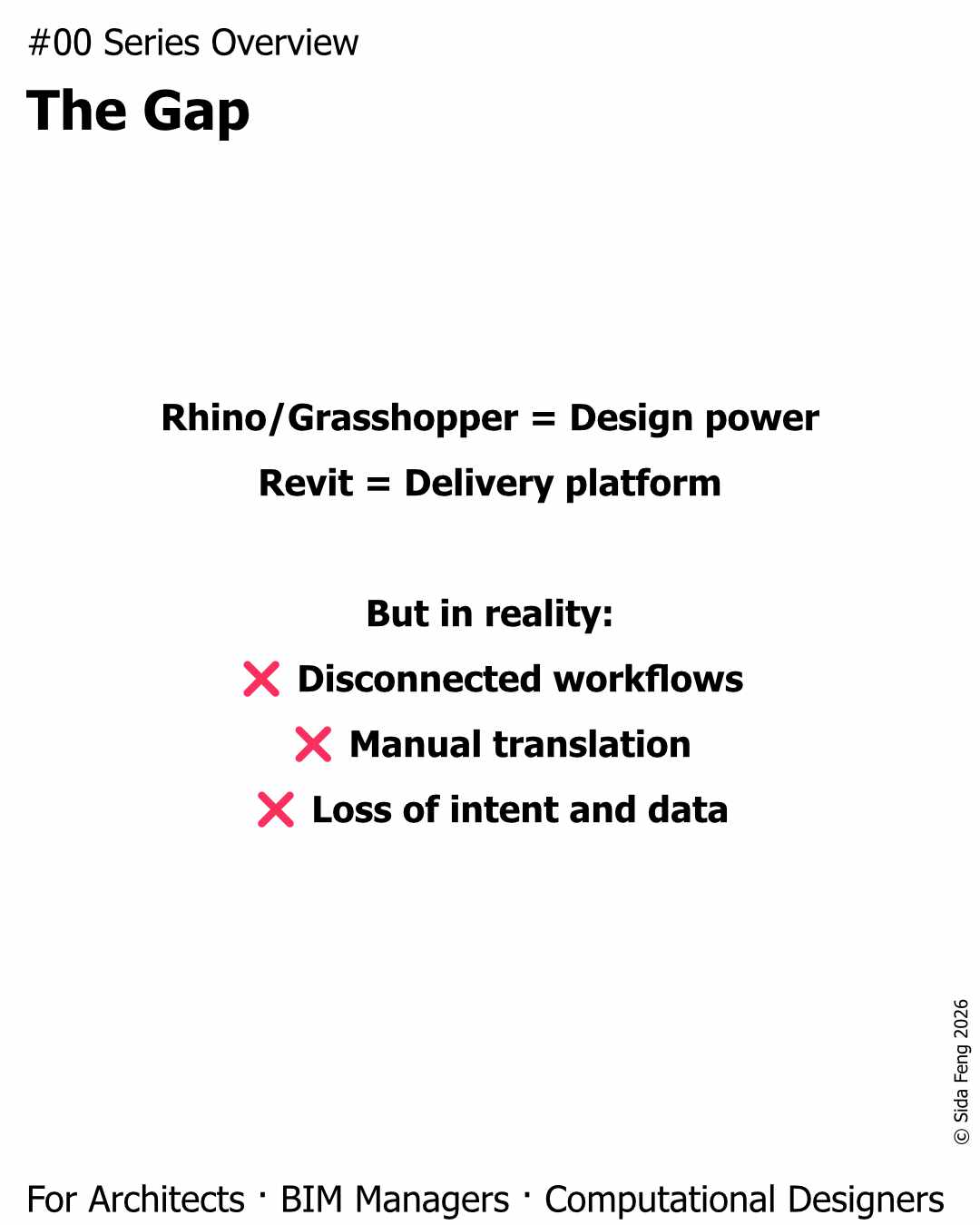
👉 Many people struggle with translating Rhino + Grasshopper designs into Revit documentation.
👉 Some people know (or have heard) that Rhino.Inside.Revit is powerful
👉 But very few know how to integrate it into real project workflows
So I’m starting a short series to share a practical Rhino.Inside.Revit workflow, based on real project experience, not theory.
What this series is (and isn’t)
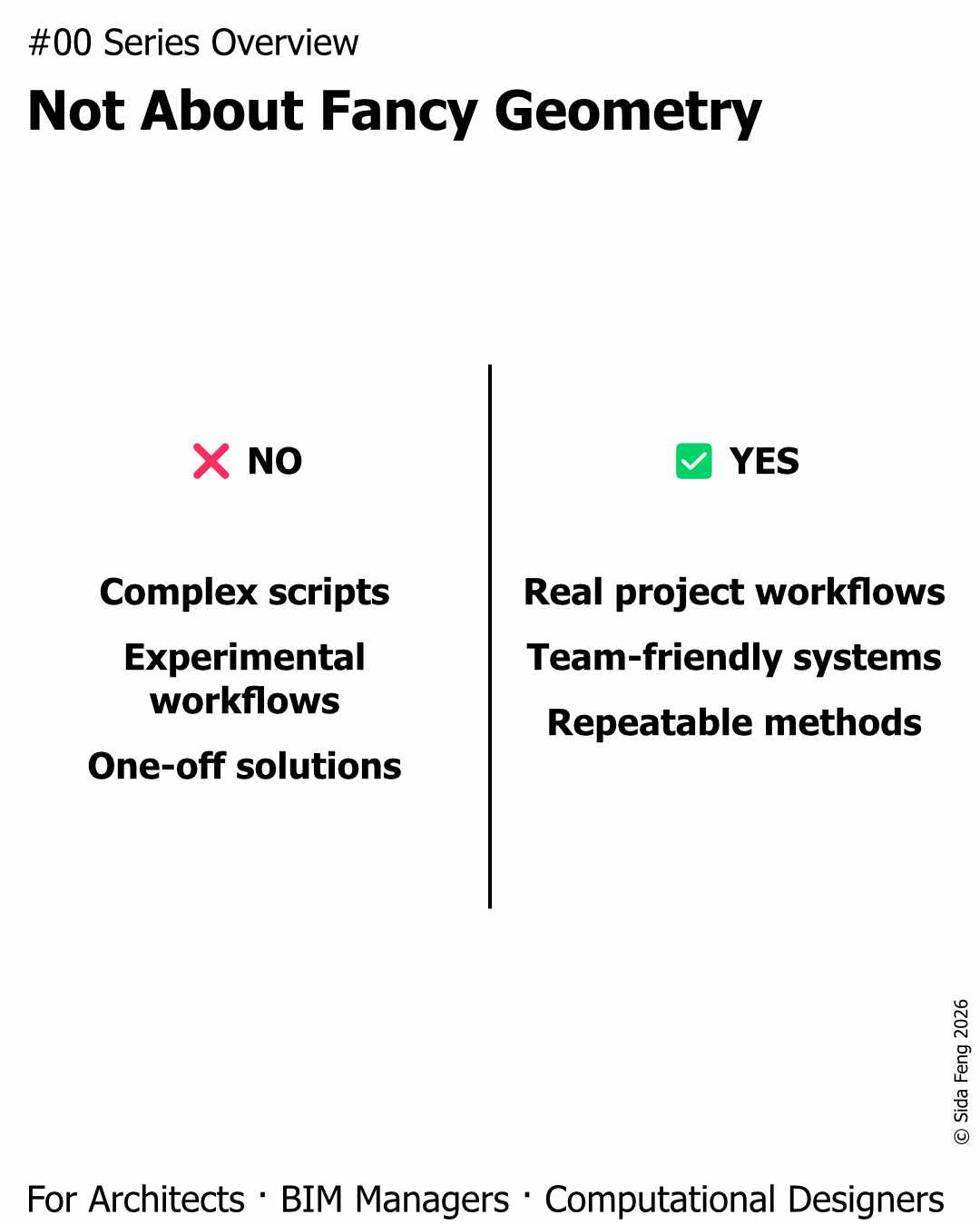
This is not about:
Fancy parametric geometry
One-off computational experiments
This is about:
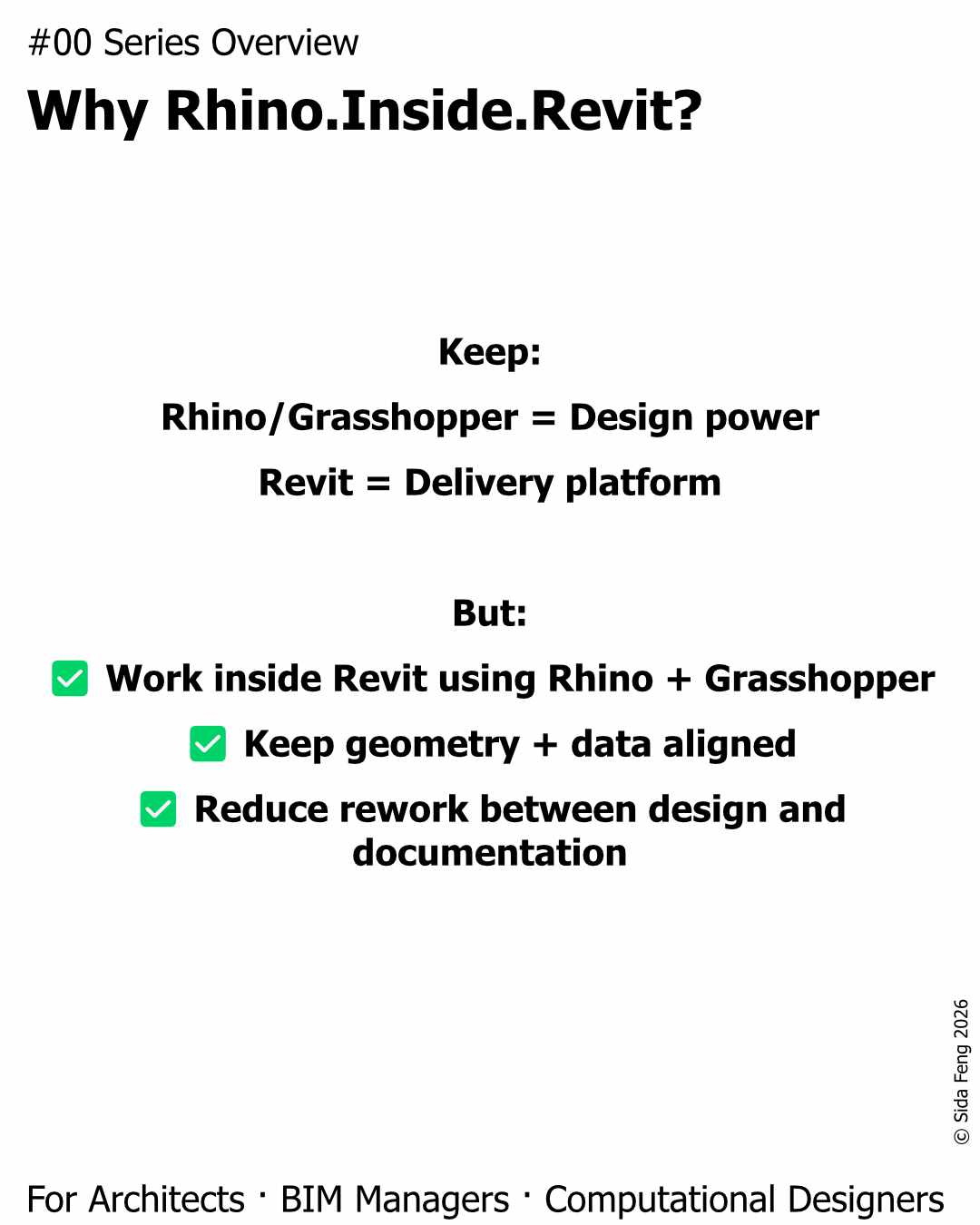
Using RiR in day-to-day project delivery
Connecting design and documentation workflows
Working effectively across all levels of architects, BIM specialists and computational designers
Who this is for
Architects looking to move beyond Revit limitations
BIM Managers seeking better workflow integration
Computational designers who want their work to be buildable and deliverable
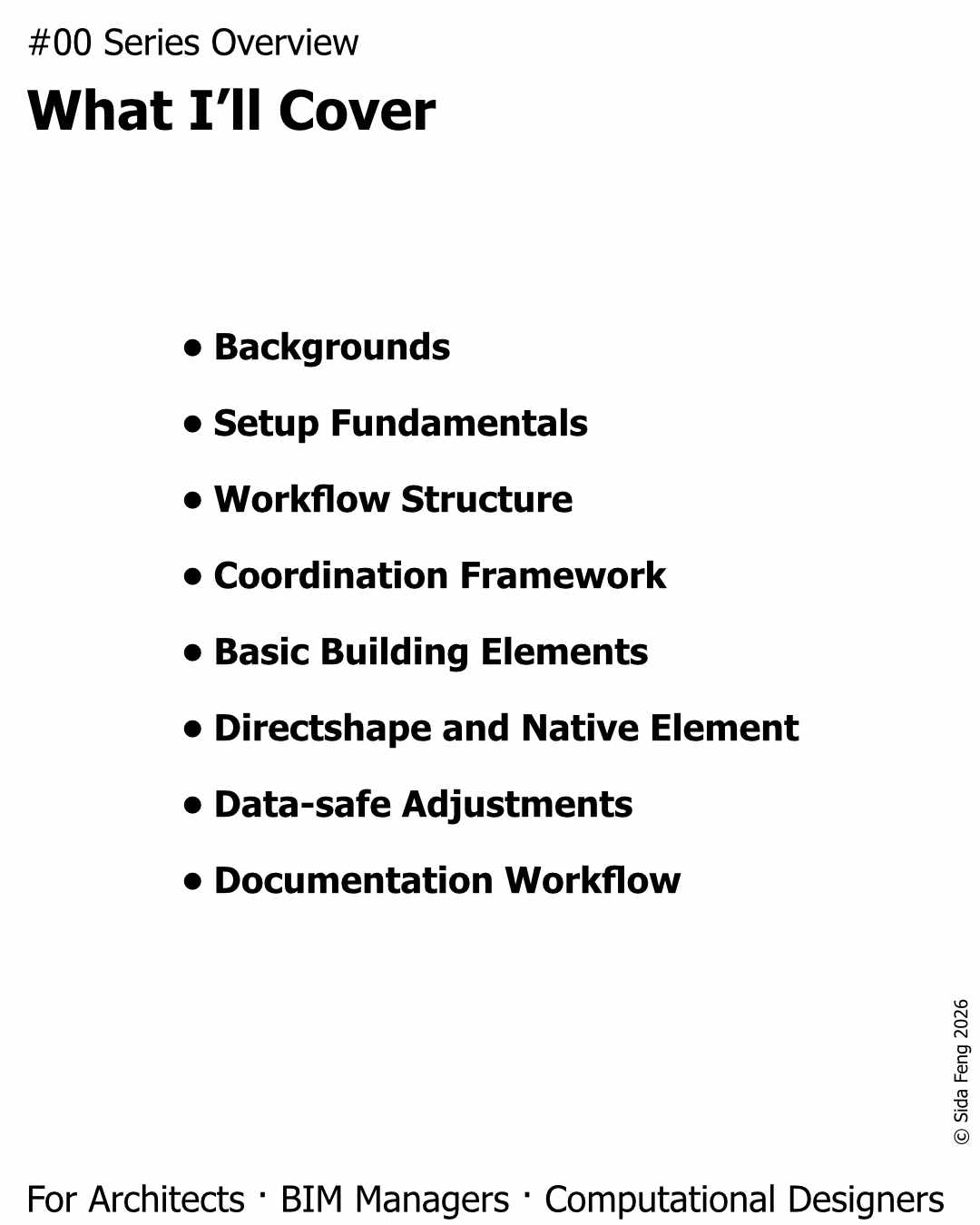
What I’ll cover
A structured, practical workflow including:
Setup (units, tolerance, templates)
Project coordination (levels, grids, coordinates)
Basic elements (walls, floors, roofs)
Convertible element & geometry (adaptive components, DirectShape, and loadable families)
Data-safe adjustment (modifying Revit without breaking embedded data)
Documentation automation (views, sheets, annotation)
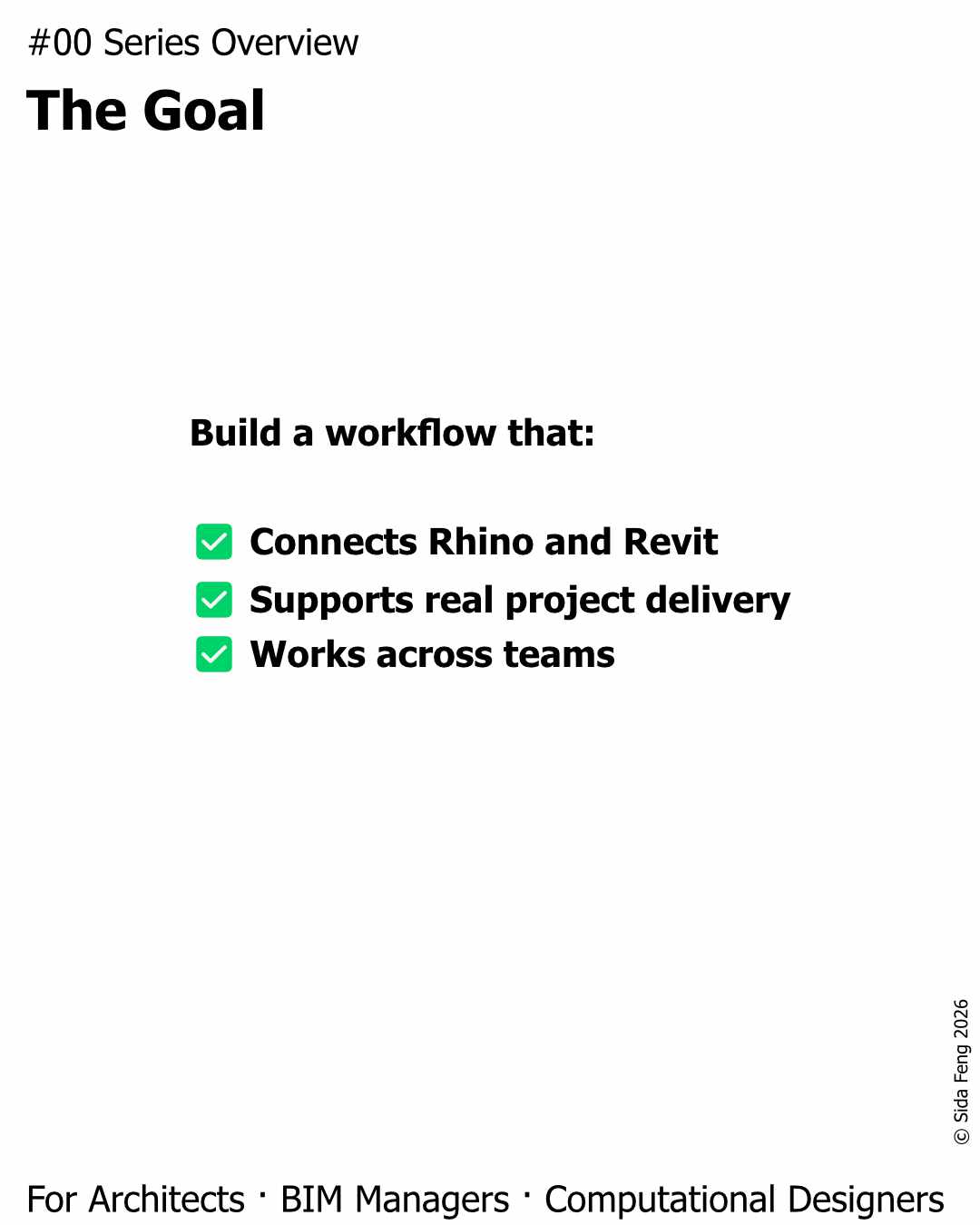
Ultimately, this series is about building a workflow that:
✅ Bridges Rhino and Revit
✅ Connects design intent with delivery
✅ Scales across teams and projects
A quick note
I am aware that there are many brilliant architects, computational designers, developers, and BIM specialists doing incredibly advanced and innovative work.
This series is not trying to compete with that or set up a standard.
It’s simply a practical sharing of what has worked for me in my real project experience, and hopefully useful to anyone interested or exploring a similar space.
I’d sincerely welcome discussions, different approaches, and better ideas along the way.
© 2026 Form Theory, Sida Feng